Concrete sidewalk building in Waltham MA - a walk that drains and holds up to winter
Cracked, sinking or puddling walk to your door? We build a new concrete walk that sheds water and stands up to salt and frost.
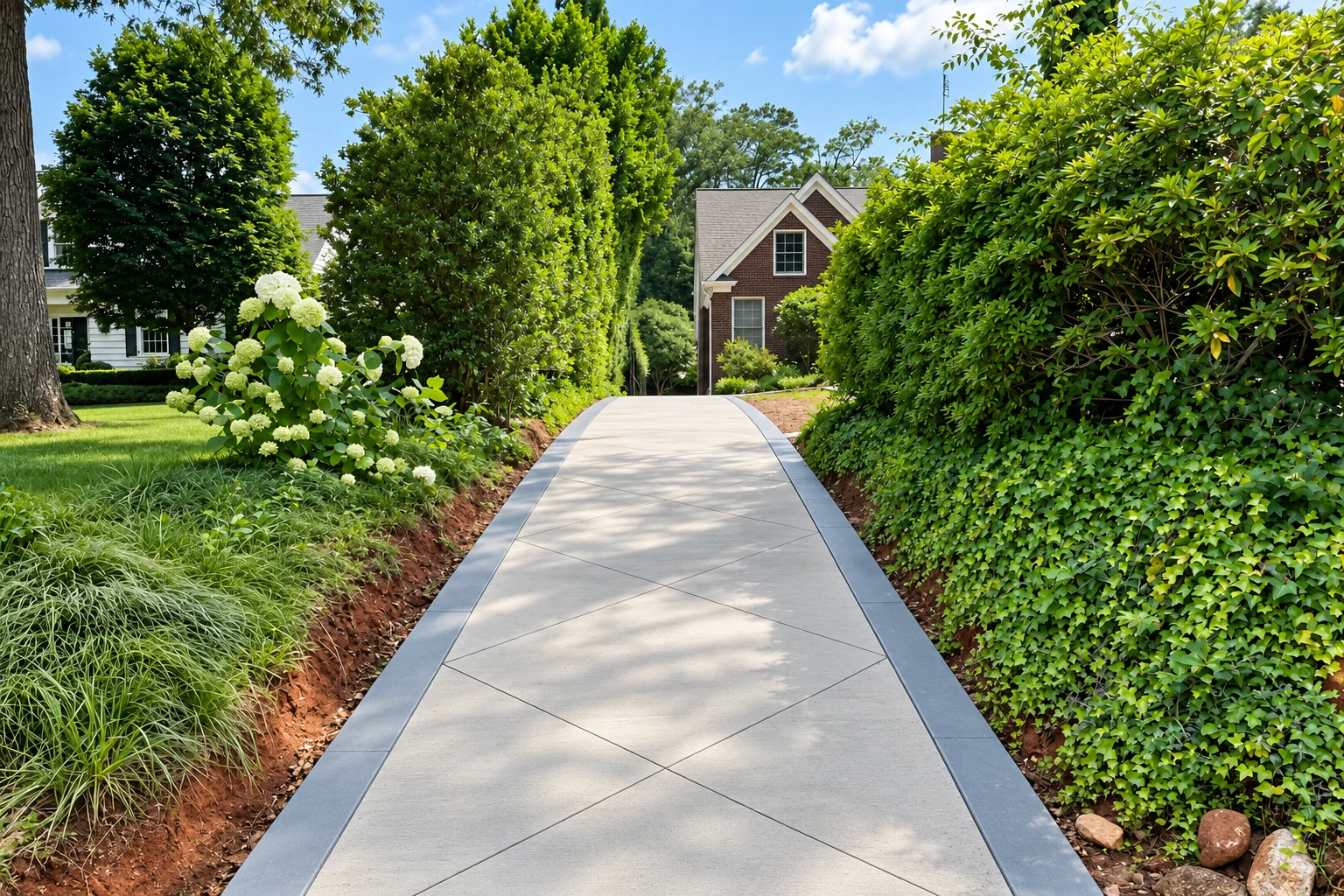
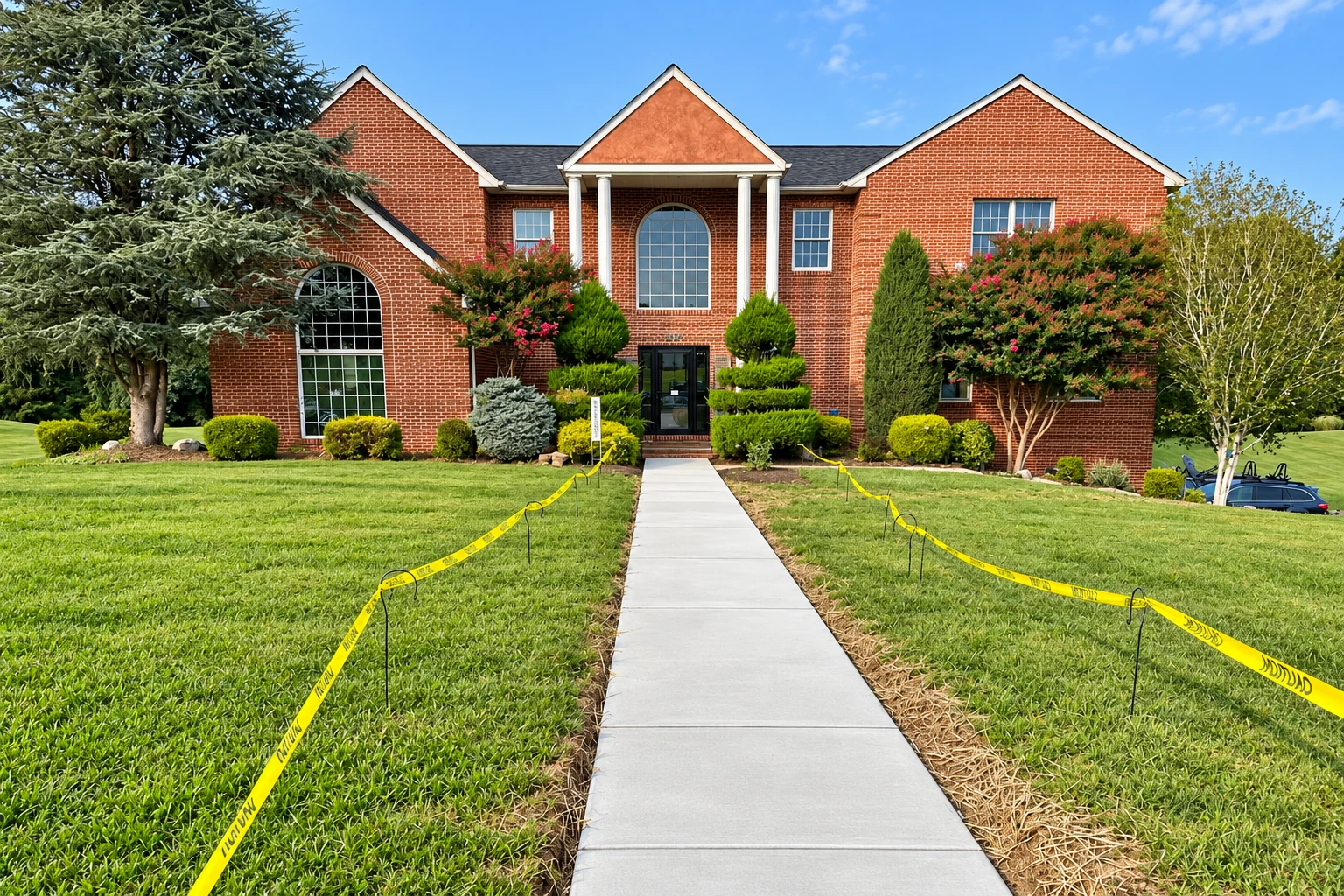
Concrete sidewalk building looks simple. Winter decides if it lasts.
A sidewalk is flatwork, the trade's word for slabs at ground level like walks, patios and driveways. Building one means forming, pouring, finishing and curing the concrete so it holds up to freezing and salt.
Most calls start with a walk that's cracked across, sunk at one end, holding a puddle by the steps or flaking on top. Those usually trace back to what's under it, where the water goes, or concrete that wasn't made for salt.
Price mostly follows the walk's size, tearing out the old one, how much base work it needs and how easy it is to reach, and the date follows permits and the weather. If you'd like color or a pattern, that's decorative concrete, and your written estimate spells out what's included.
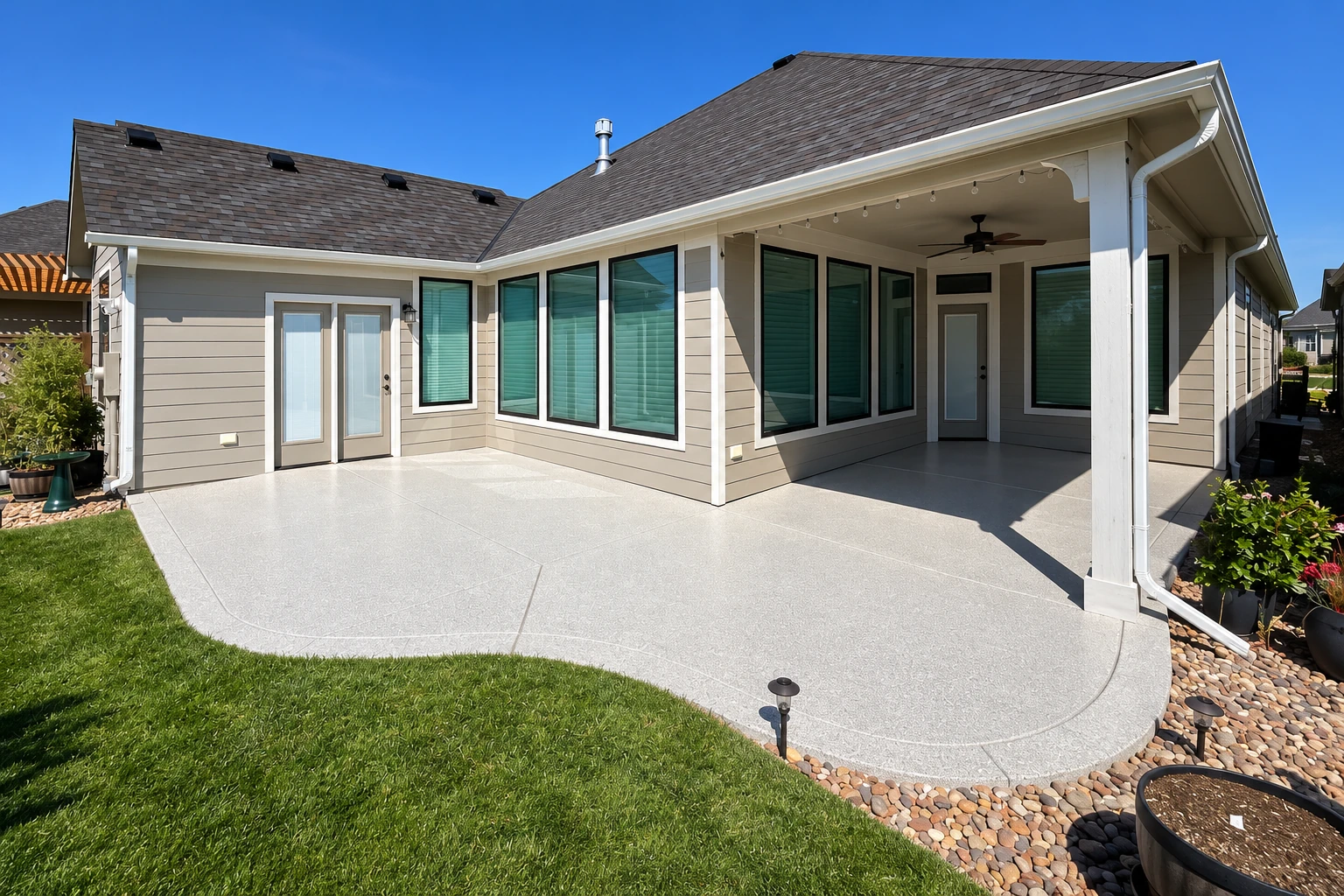
Our sidewalk plan starts with water. The concrete comes after.
A walk lasts when it drains, so before we form anything I look at the slope, where your downspouts empty and where the snow gets piled all winter. Those spots can soak one stretch of concrete over and over, so we pitch the walk away from the house and plan around them.
Then we order air-entrained concrete and plan the pour away from midday heat, which can leave a weak, dusty top. I'd rather spend an extra hour planning than rush a pour.
What a concrete sidewalk job covers. More than the pour.
Tear-out and matched edges
We haul off the old walk and match heights where the new one meets steps, the driveway or garage floor concrete, so there's no trip edge.
Digging out and packing the base
We dig out and pack the subgrade, the ground the slab sits on, so the new walk isn't left to settle and crack with loose dirt.
Setting forms and slope
Forms hold the walk's edges and its pitch, so rain and meltwater run off the side instead of toward your house or into a low spot.
Pouring and broom finish
We give the top a broom finish, a light brushed texture for grip, instead of a slick troweled surface that can work the protective air out.
Control joints
We cut control joints, shallow grooves across the walk, on time so that if the concrete cracks as it shrinks, it cracks inside the groove.
Curing the new concrete
Curing means keeping fresh concrete damp and protected while it gains strength, so the surface comes out hard instead of weak and dusty.
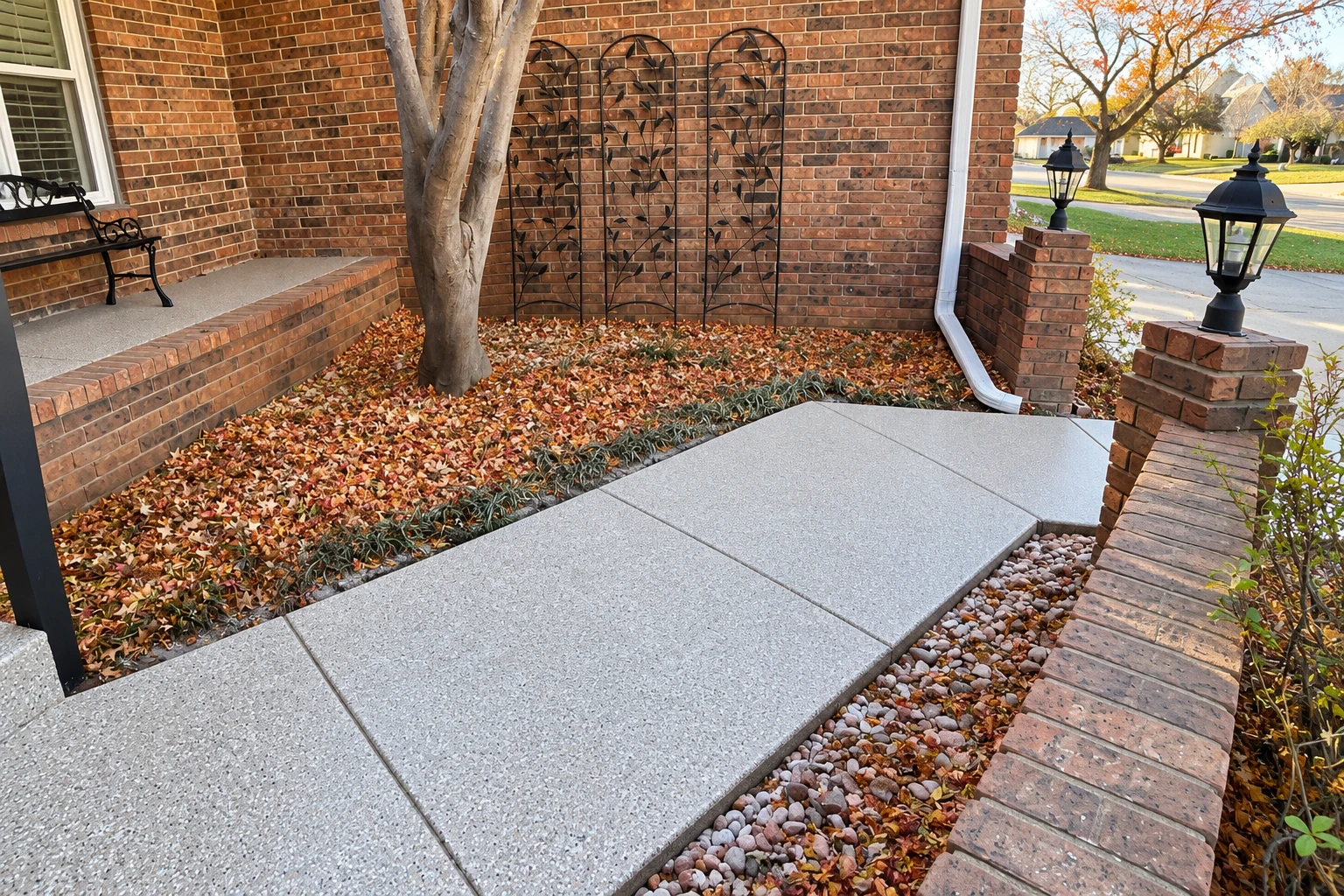
A sidewalk and its grading work together. So we plan them together.
When the base is just raked level, the walk settles with the dirt and cracks. When the slab tips toward the house, water sits against your foundation. Pour at midday in July and the top can turn weak and dusty, and joints cut late leave cracks wherever the concrete picks.
The base is the part nobody sees on day one, which makes it the first thing people want to cut when the budget's tight. I'd rather you skip a fancy finish than a packed base, because a plain walk on good ground still looks right years from now.
From your call to the cleanup. Here's how a sidewalk job runs.
01. Call or send a message
Call (781) 622-9470 or use the form and tell us roughly how long and wide the walk is. We'll reach out to set a time.
02. I come out and look
I come out myself, measure the walk, look at what's under the old one and where the water runs, and ask how you use and clear it.
03. Your written estimate
You get a written estimate showing what's included, then we line up any permits, surveyors or engineers before the pour goes on the schedule.
04. Pour, cleanup and walkthrough
Our crew pours within city hours, 7 am to 5 pm weekdays and 8 am to 4 pm Saturdays, then we clean up and walk it with you.
Tell us about your sidewalk. We'll come take a look.
Send the walk's rough length and width and how close it runs to the curb. We reply within one business day to set up a free on-site estimate, no obligation.
(781) 622-9470Based in Waltham. Working in the cities around it.
- Waltham, MA
- Newton, MA
- Cambridge, MA
- Weston, MA
- Watertown, MA
- Belmont, MA
- Lexington, MA
- Wellesley, MA
- Arlington, MA
- Needham, MA
- Burlington, MA
- Sudbury, MA
We're based in Waltham and build walks in Newton, Watertown and many cities around them. If yours isn't on the list, call and ask.
Mon–Fri: 7 AM–10 PM, Sat–Sun: 6 AM–11 PM
Questions about new sidewalks. Here are straight answers.
Read through the answers below, and if your question isn't here, call (781) 622-9470 and I'll walk you through it.
What does a concrete sidewalk cost near Boston?
A concrete sidewalk in the Boston area usually costs about $9 to $23 per square foot for the finished walk. That's the area's going rate, not our price, and where yours lands shows up on your written estimate.
Why does air in the concrete mix matter for a sidewalk in winter?
Air-entrained concrete has tiny bubbles mixed through it that give freezing water room to expand, so the top holds up to frost and salt far better. National concrete guidance says a higher strength rating doesn't make up for missing air, which is why we ask the ready-mix plant for it when we place the order.
When can I use salt or deicer on a new concrete sidewalk?
Hold off while it's new, because fresh concrete needs time to cure and develop its strength before deicer or hard freezing, even once the surface looks hard. Sand gives grip in the meantime, and if a late-fall pour is on the table, I'll talk the timing through with you.
Do I need a permit to build a sidewalk in Waltham?
Waltham's DPW issues street opening permits for curb, water, sewer and drain cuts, and its list doesn't name sidewalk building, so ask the DPW at (781) 314-3800 about your walk. The strip from curb to property line is public right of way, and curb cuts need a contractor the city approves. We handle the permit steps for our work.
Does a sidewalk contractor in Massachusetts need state registration?
Massachusetts requires Home Improvement Contractor registration for contracting work on an existing, owner-occupied home with one to four units. The state's list of work that needs none includes driveways, ground level patios and landscaping, so ask how your walk is classed. We're licensed and fully insured, and the state requires home improvement contracts over $1,000 to be in writing.
We pour more than walks. See our other concrete work.
- Concrete driveway building
- Concrete patio construction
- Stamped concrete services
- Garage floor concrete
- Decorative concrete
- Concrete retaining walls
- Concrete floor installation
- Concrete pool decks
- Concrete steps construction
- Slab foundation building
- Foundation installation
- Concrete parking lot building
- Concrete footings
- Foundation raising
- Concrete cutting
Sidewalk or steps falling apart? Call A&B Waltham Concrete.
We answer until 10 pm weekdays and 11 pm weekends, so call after work with the walk's size and we'll set a time to look.
(781) 622-9470